Quand | When
07.10.2026 | 18h30
Où | Where
la lumière collective
Média | Media
16mm
En présence de Christian Flemm
Billets | Tickets
Avec | With

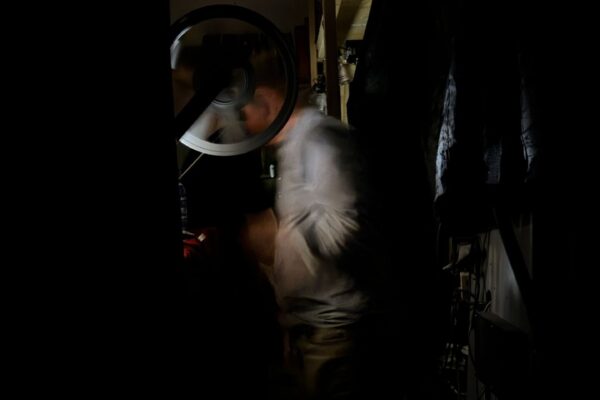
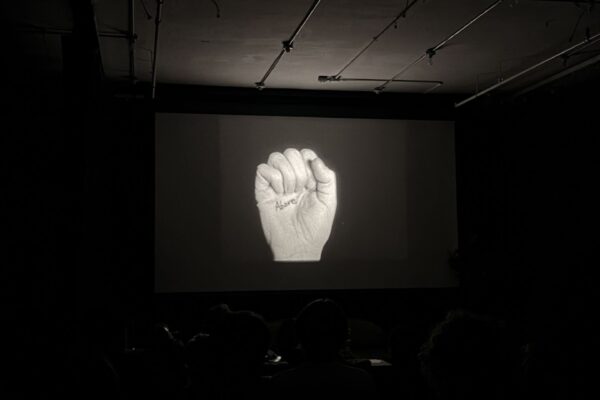
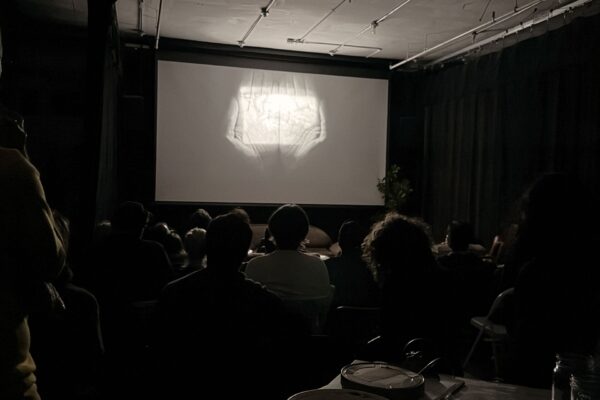
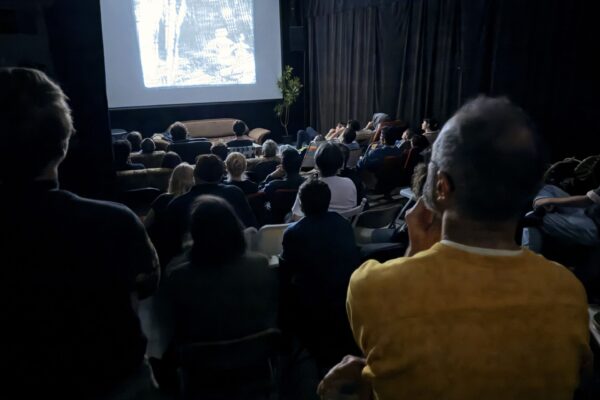
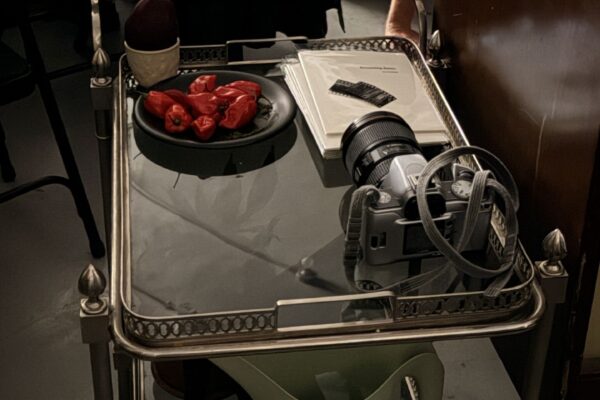
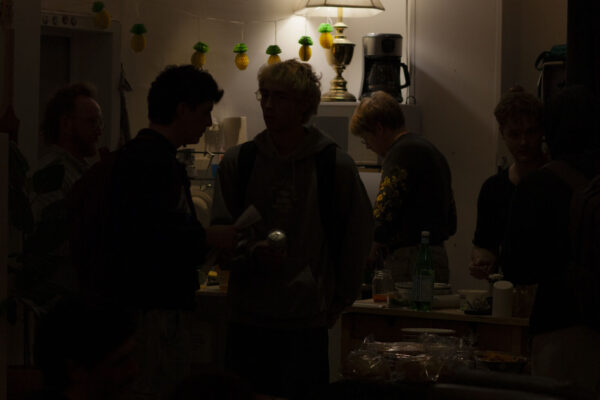
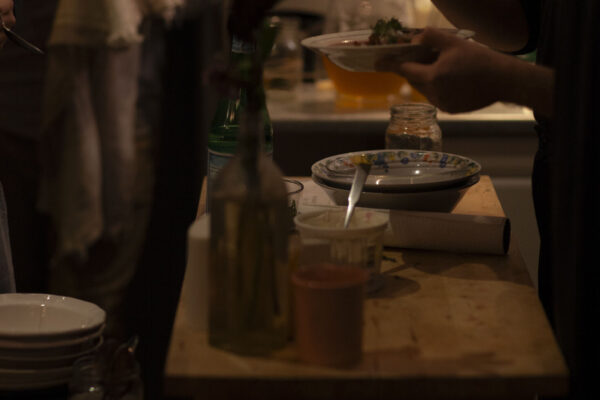
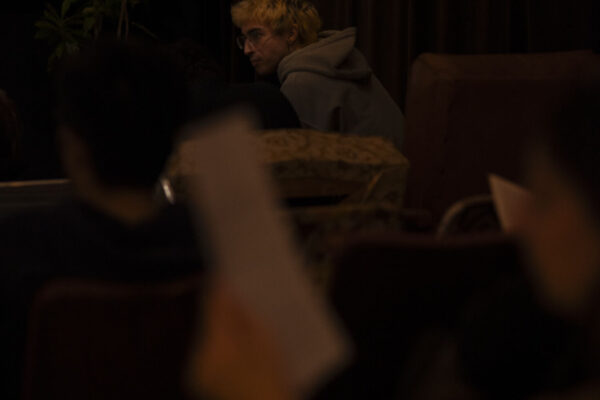
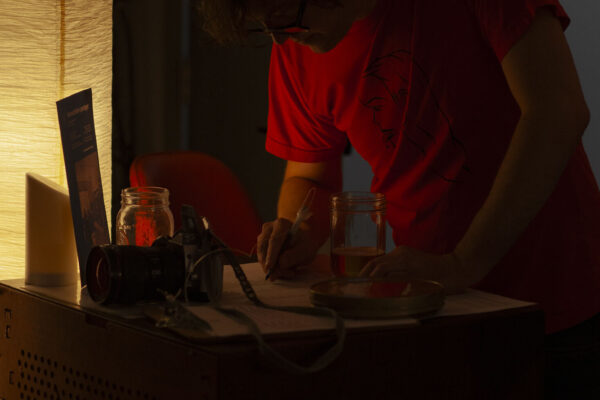
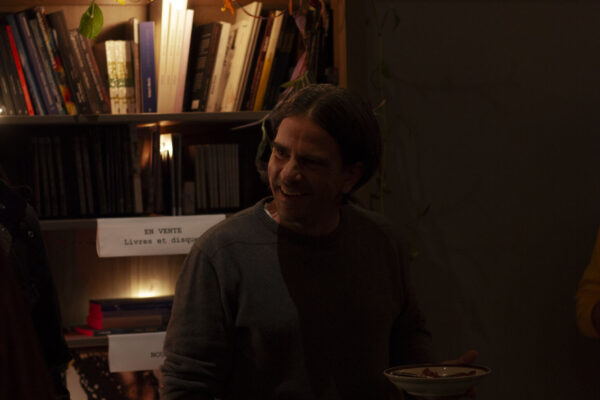
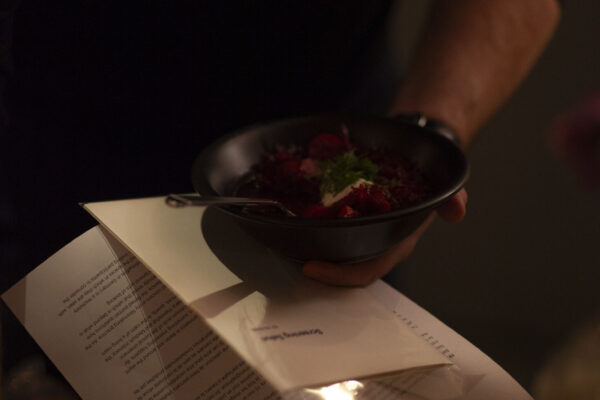
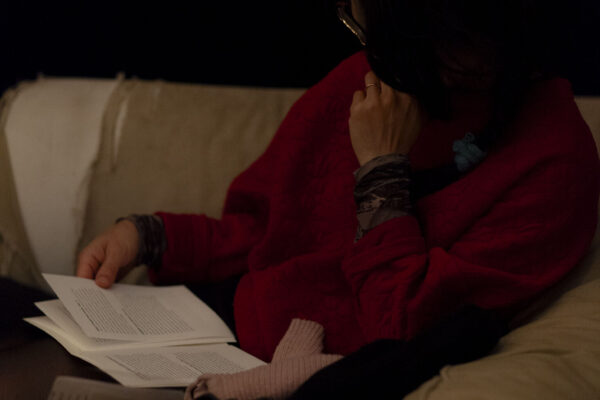
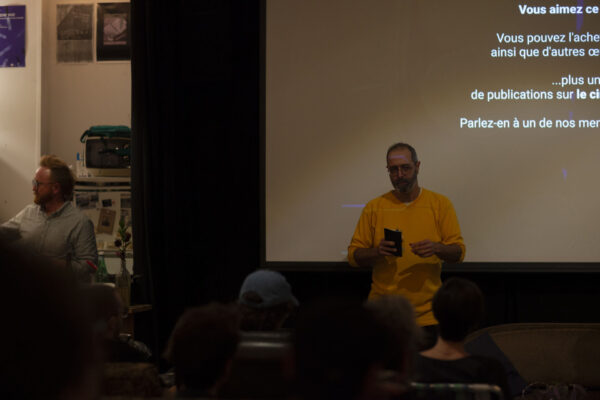
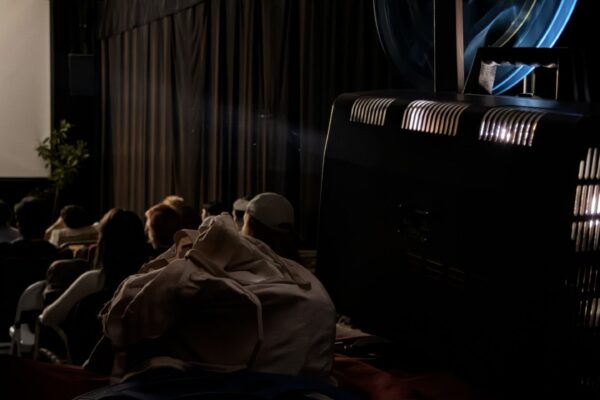
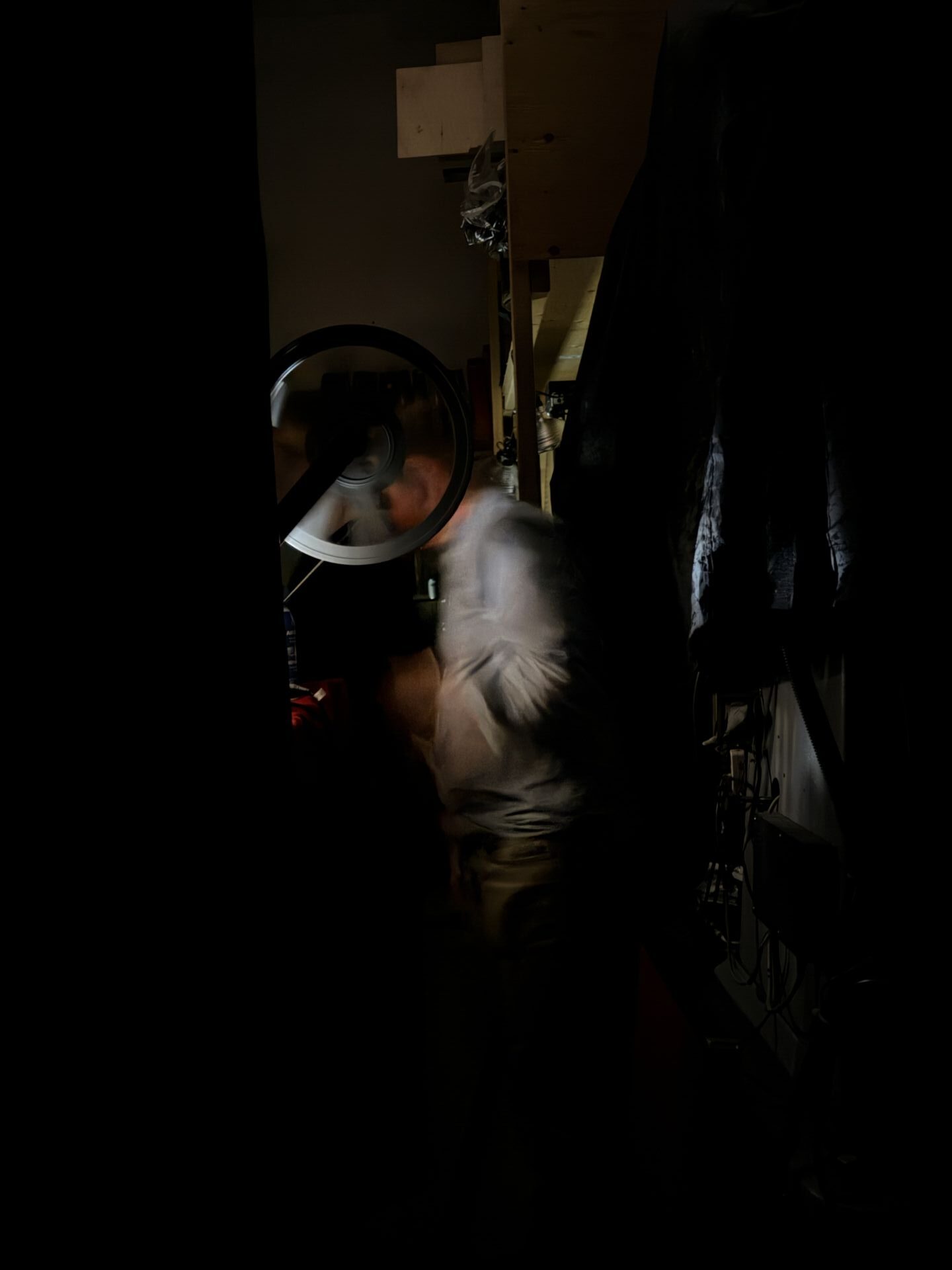
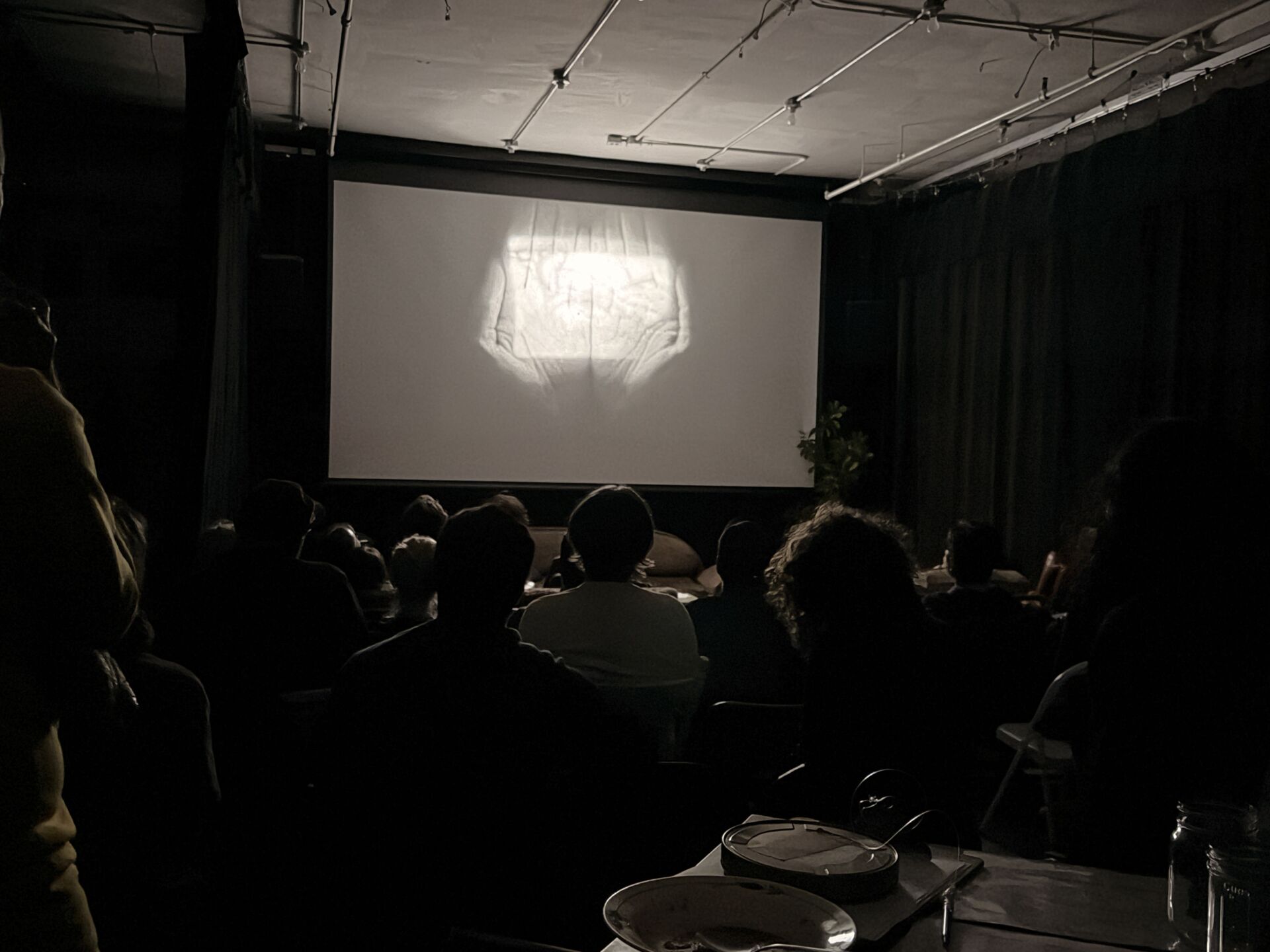
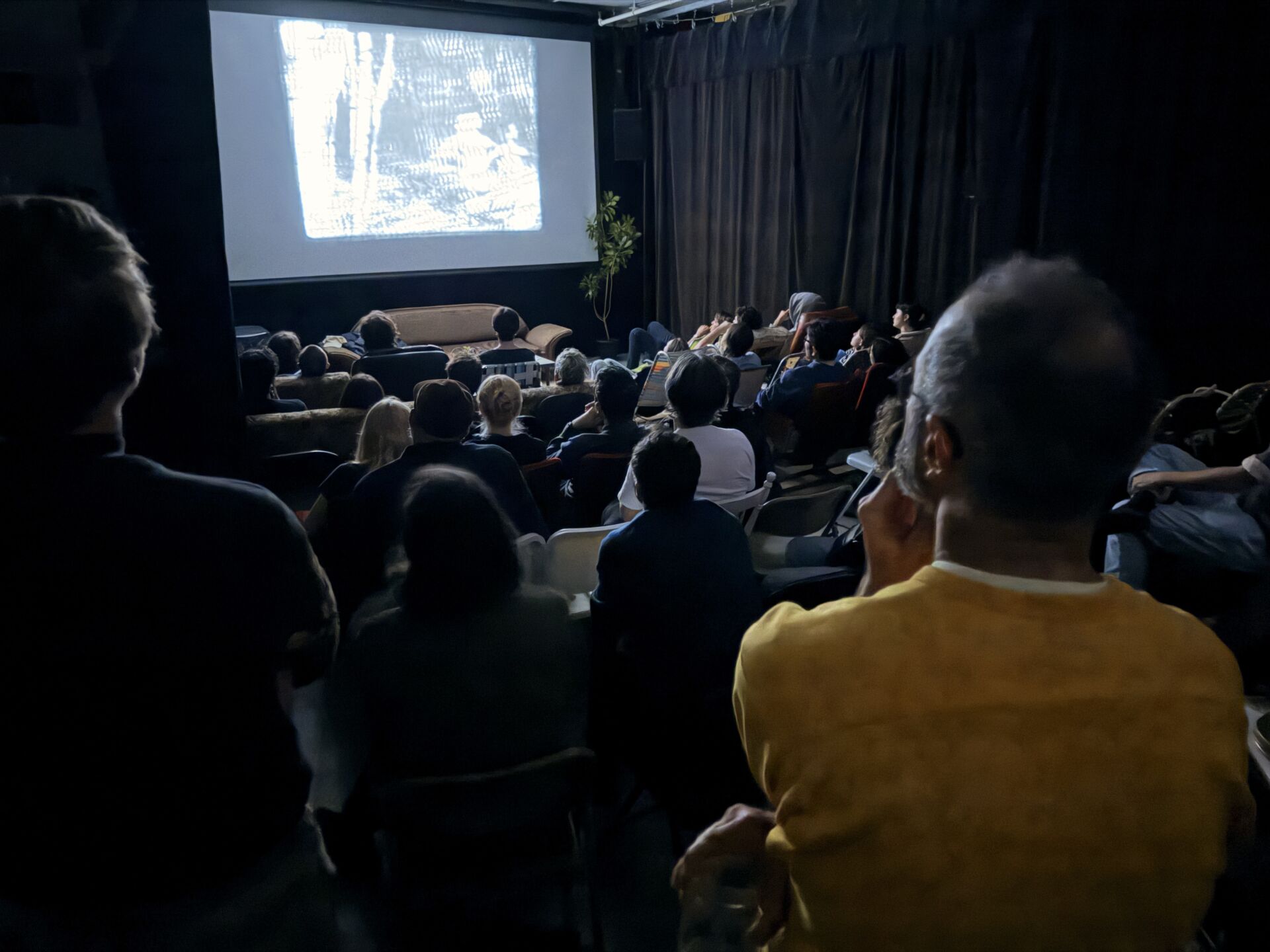
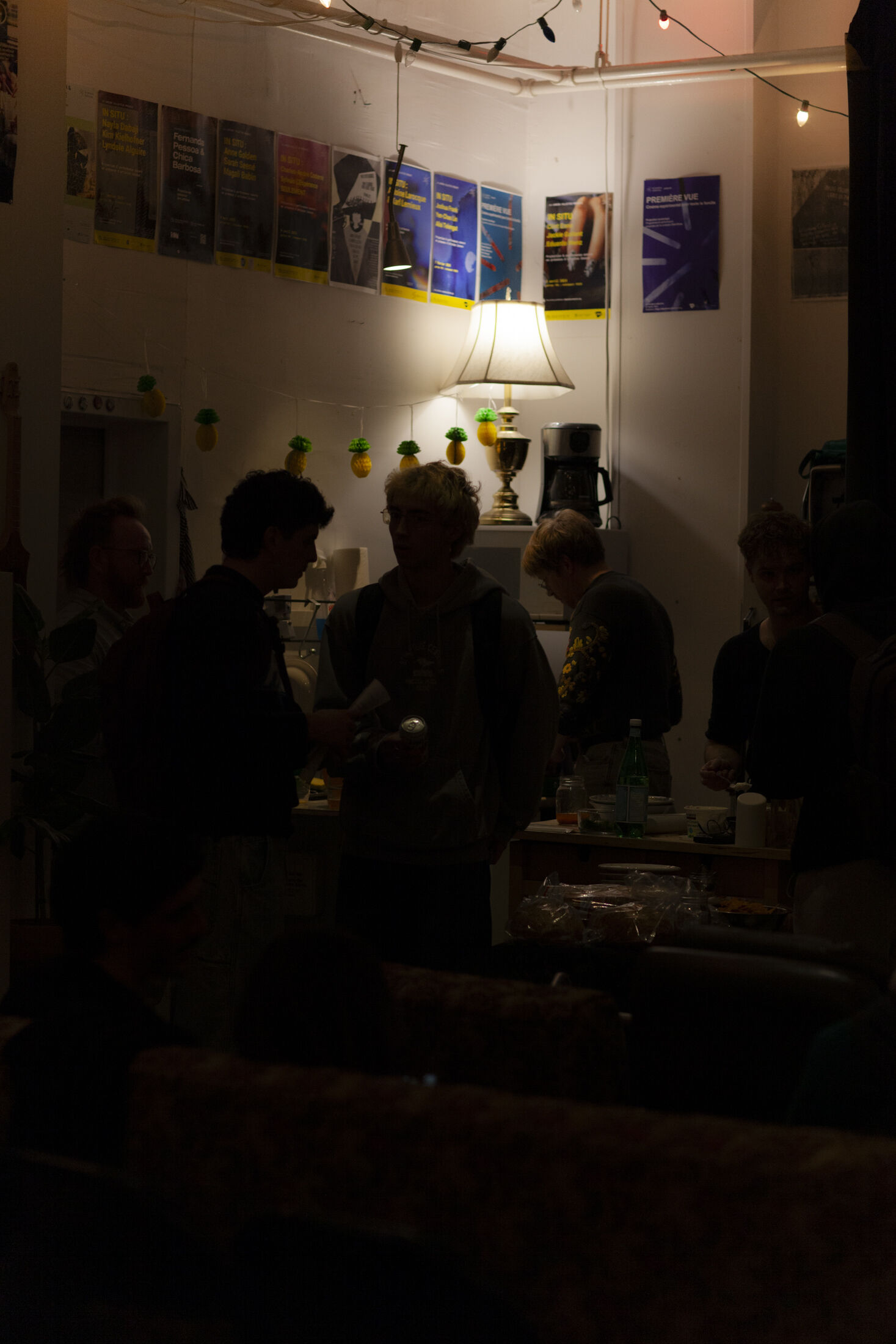
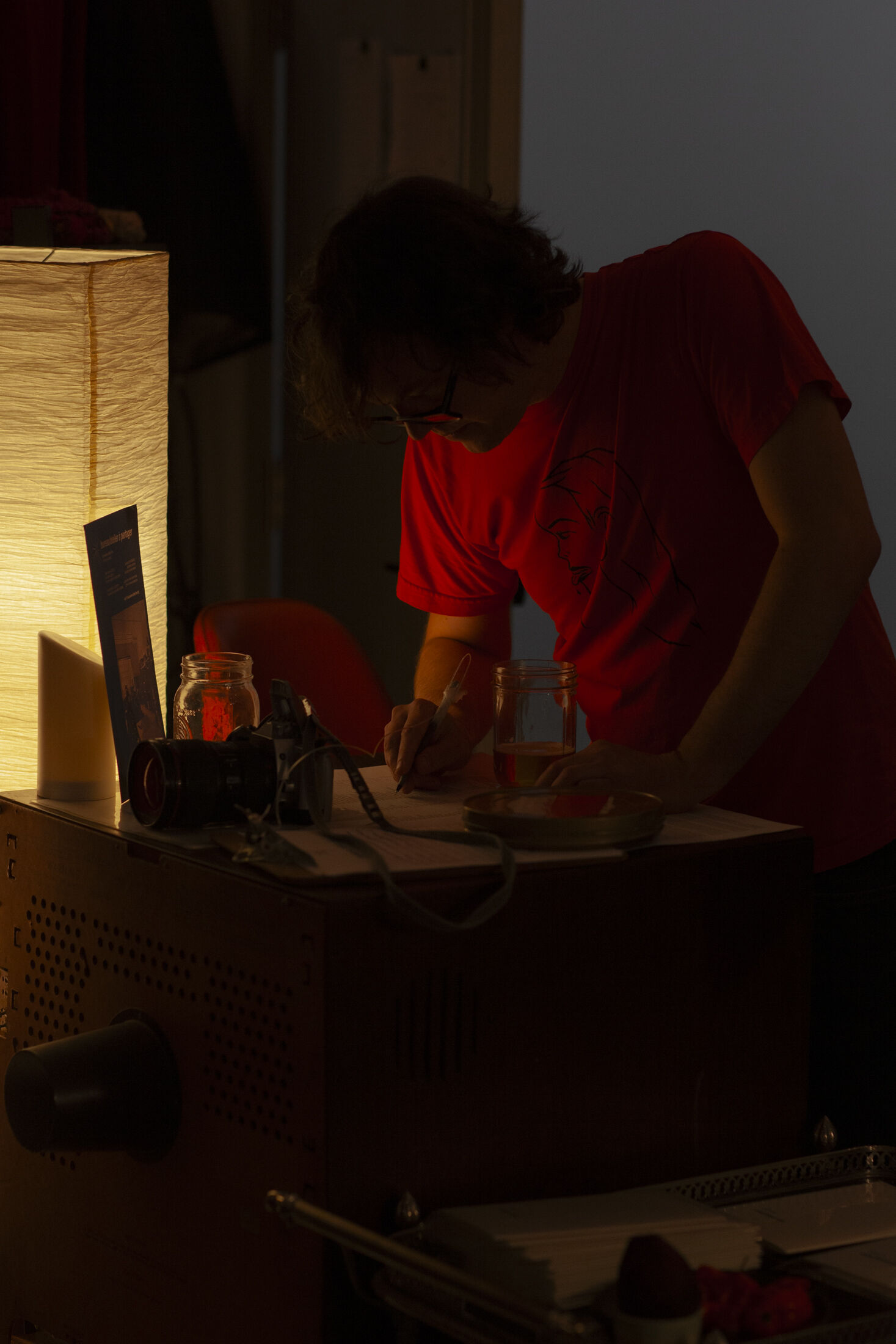
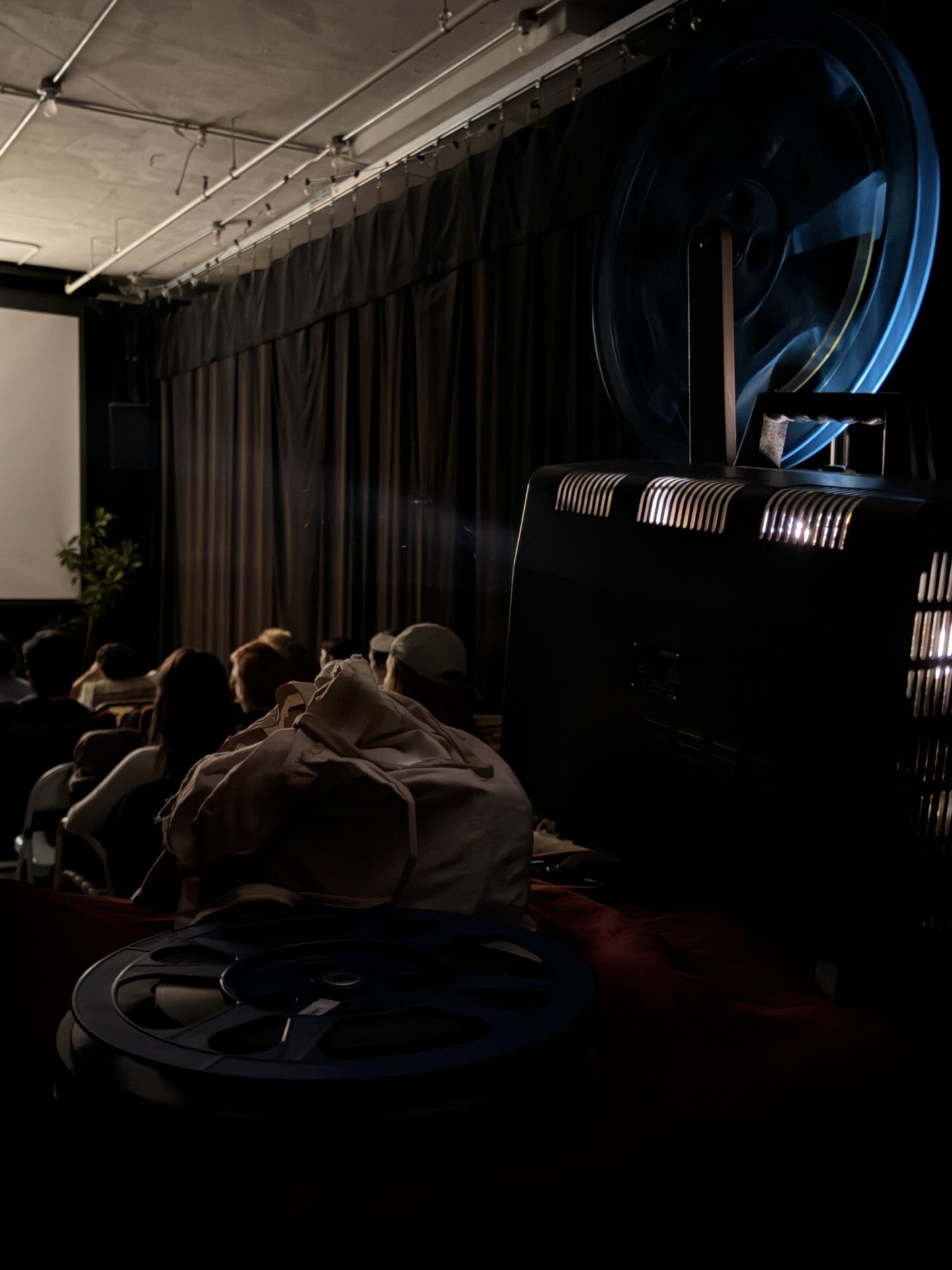
Since 2023, I have hosted monthly Screening Salons across a variety of apartments in Berlin and around the world, presenting my work alongside other 16mm films from my collection. In doing so, something interesting happens. By relocating the film projector from the theater into the home, we subvert the proscenium arch of the typical cinematic environment, and a new underground emerges: one founded on questions of privacy, friendship and Medium Intimacy: the unique forms of attention that emerge when films are shared among small audiences, quietly, in the calm of a living room.
Perhaps because of this, over the past four years, portraiture has become a central concern in my filmmaking practice. As the site of a set of social relations negotiated between artist and sitter, image and audience, the filmed portrait questions how presence is held within the interval of the frame, and how the frame may simultaneously reveal that which is beyond what is pictured, as well as withhold the sitter’s presence, through gesture, duration and reciprocal acts of looking.
Motion picture filmmaking, in particular the amateur formats of 16mm and 8mm (Schmalfilm in German) is a resolutely sculptural art. The image cast by the projector transforms both the filmed images and the spaces in which they are seen, with the frame becoming a threshold that establishes intimacy while preserving distance, inviting participants to consider the conditions of filmic representation. Put simply, it is the matter of how the light received through the taking lens of the camera becomes light shared through the simple act of projection.
Tonight’s program leaves the cinema for the house with a program of portrait films (by myself as well as others) that create distance through the hanging of a frame. If that act may be seen as the creation of a barrier, these films ask what it means to install such a barrier within the lived continuity of another’s existence, and, beyond themselves, attempt to register the basic asymmetries produced by barriers both visible and invisible across everyday life.
CHRISTIAN FLEMM
Christian Flemm est un cinéaste indépendant, commissaire, restaurateur de films et technicien de laboratoire basé à Berlin. Travaillant principalement sur pellicule 16 mm sans intermédiaire numérique, il met en pratique ce qu’il appelle le « Medium Intimacy », une approche dévotionnelle de l’image en mouvement qui s’oppose aux accélérations et à la désincarnation de l’ère numérique. À travers des œuvres réalisées à la main, de petite échelle, généralement projetées dans des cadres domestiques, Flemm met en avant les propriétés tactiles, temporelles et relationnelles du cinéma, suggérant ainsi que celui-ci peut être un lieu de véritable rencontre plutôt qu’un simple objet de consommation à distance.
Ses œuvres sur papier sont publiées par Eckstein, à Berlin (UE), et par Grotesk Press (États-Unis).
Christian Flemm is a personal filmmaker, curator, film restorer, and laboratory technician based in Berlin. Working primarily on 16mm film without a digital intermediate, he practices what he calls Medium Intimacy—a devotional approach to the moving image that resists the accelerations and disembodiments of the digital age. Through handmade, small-scale works typically screened in domestic settings, Flemm emphasizes the tactile, temporal, and relational properties of film, proposing that cinema can be a site of genuine encounter rather than distant consumption.
His works on paper are published by Eckstein, Berlin (EU), and Grotesk Press (USA).

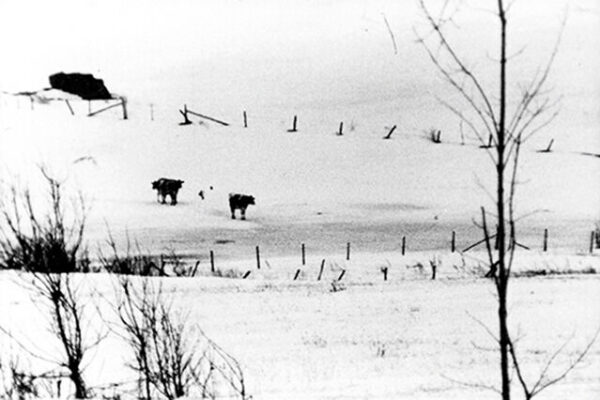
Screening Salon with Christian Flemm
07.10.2026 | 19h30 | la lumière collective | 63 mins
- PRINTER
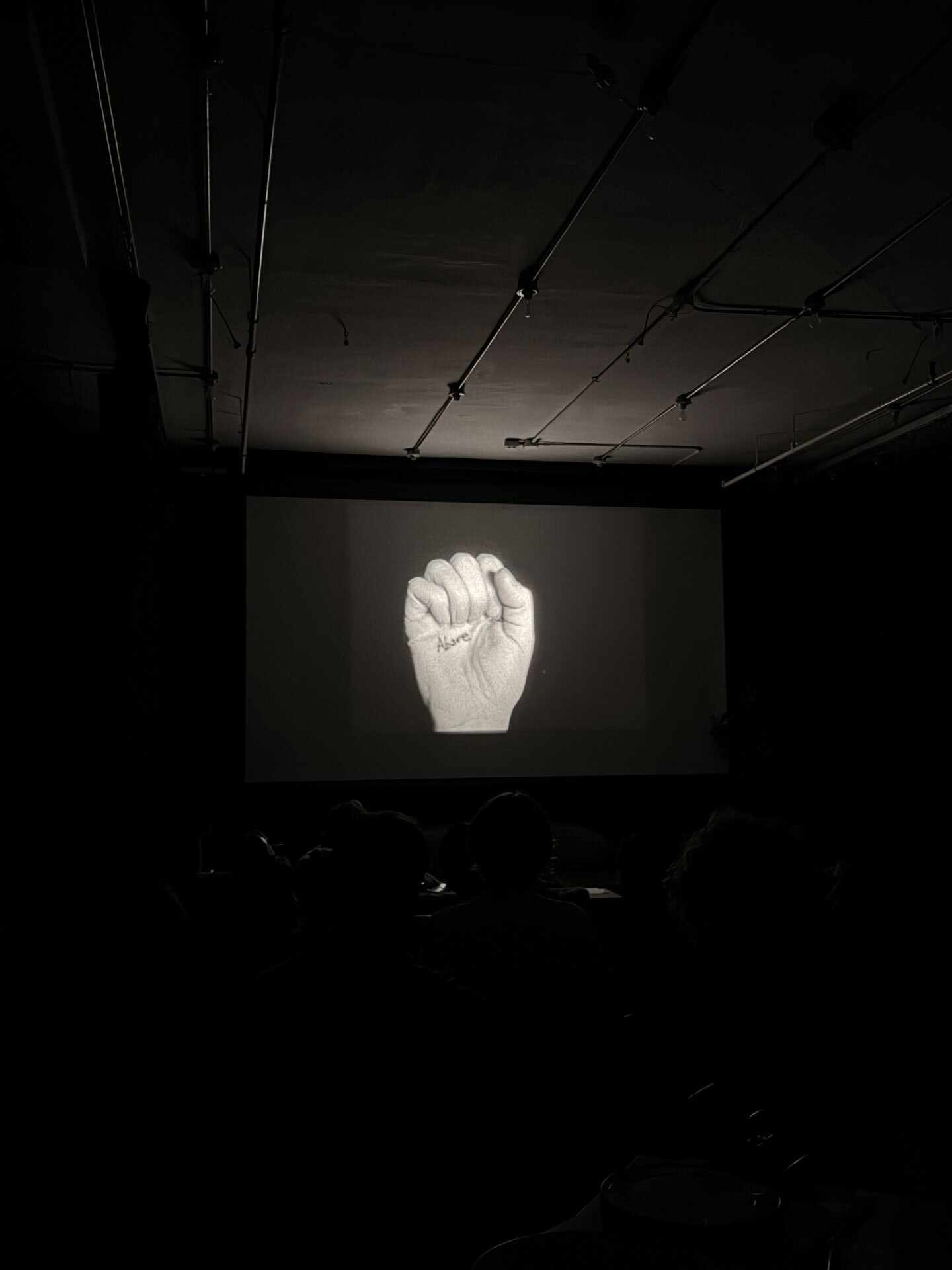
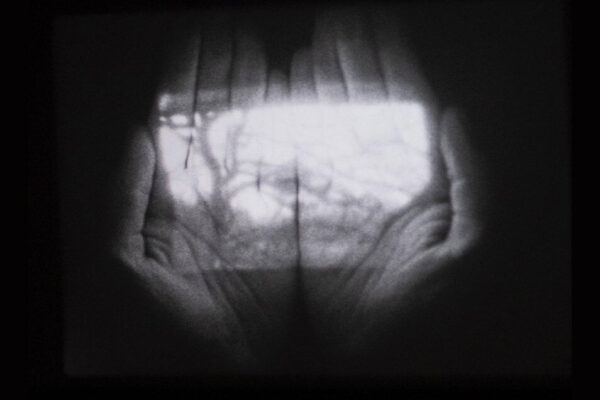
- II (Above)
- IN LIMBO
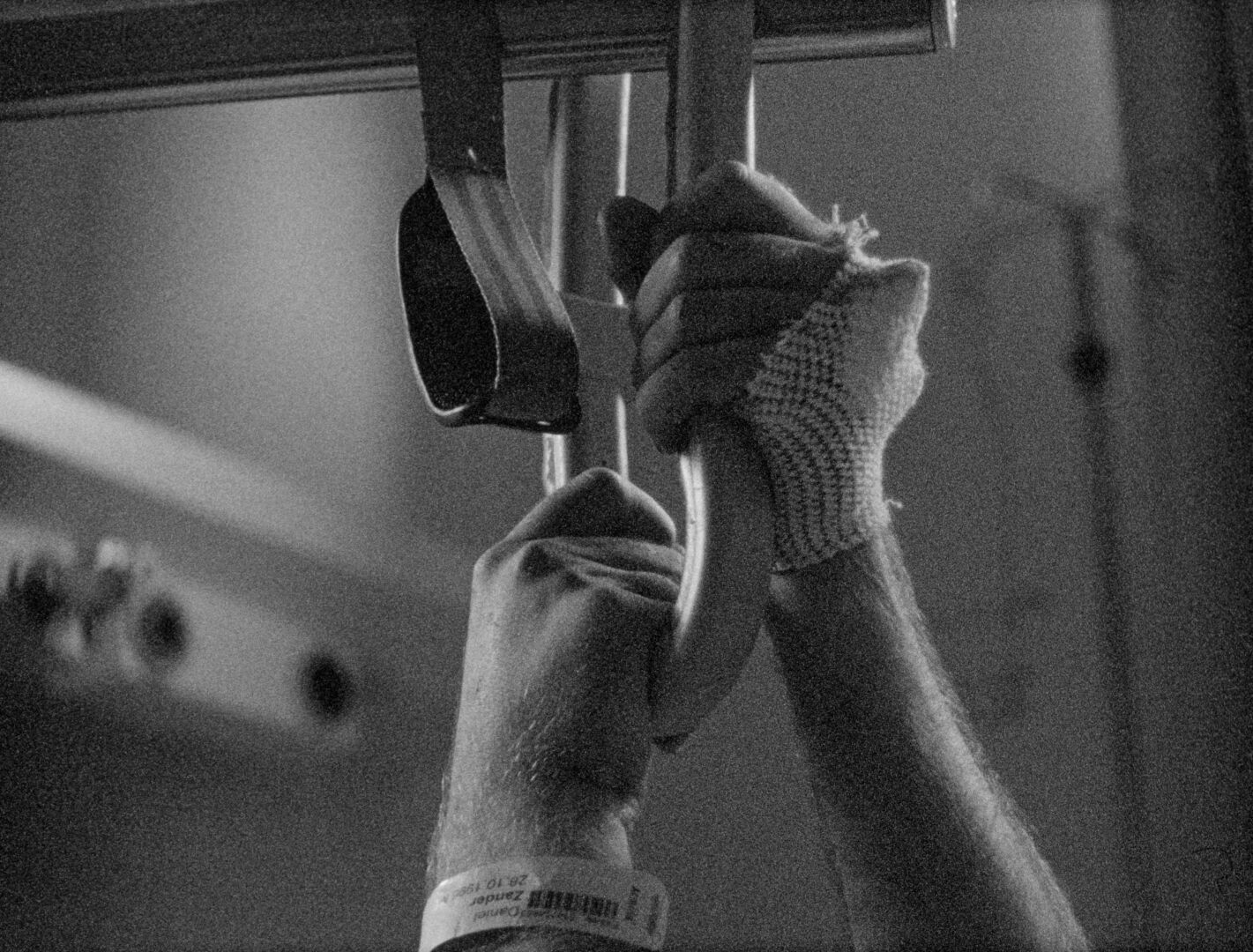
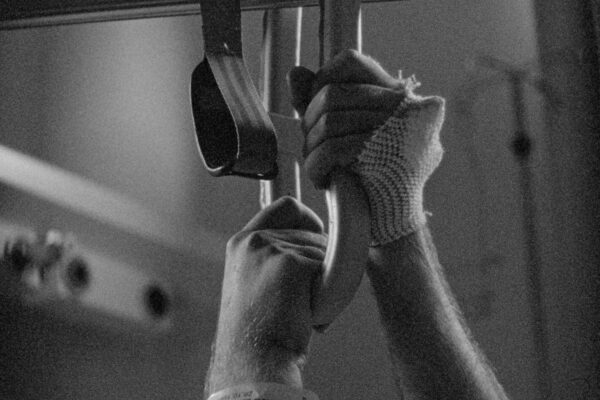
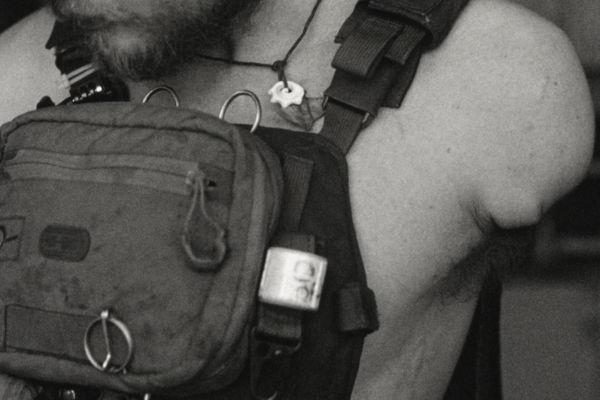
- DANIEL
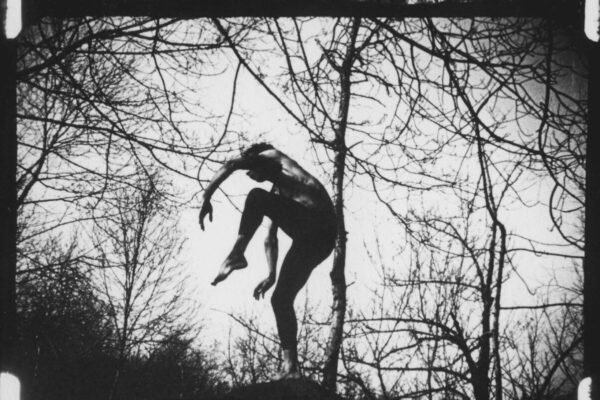
- A Study in Choreography for Camera
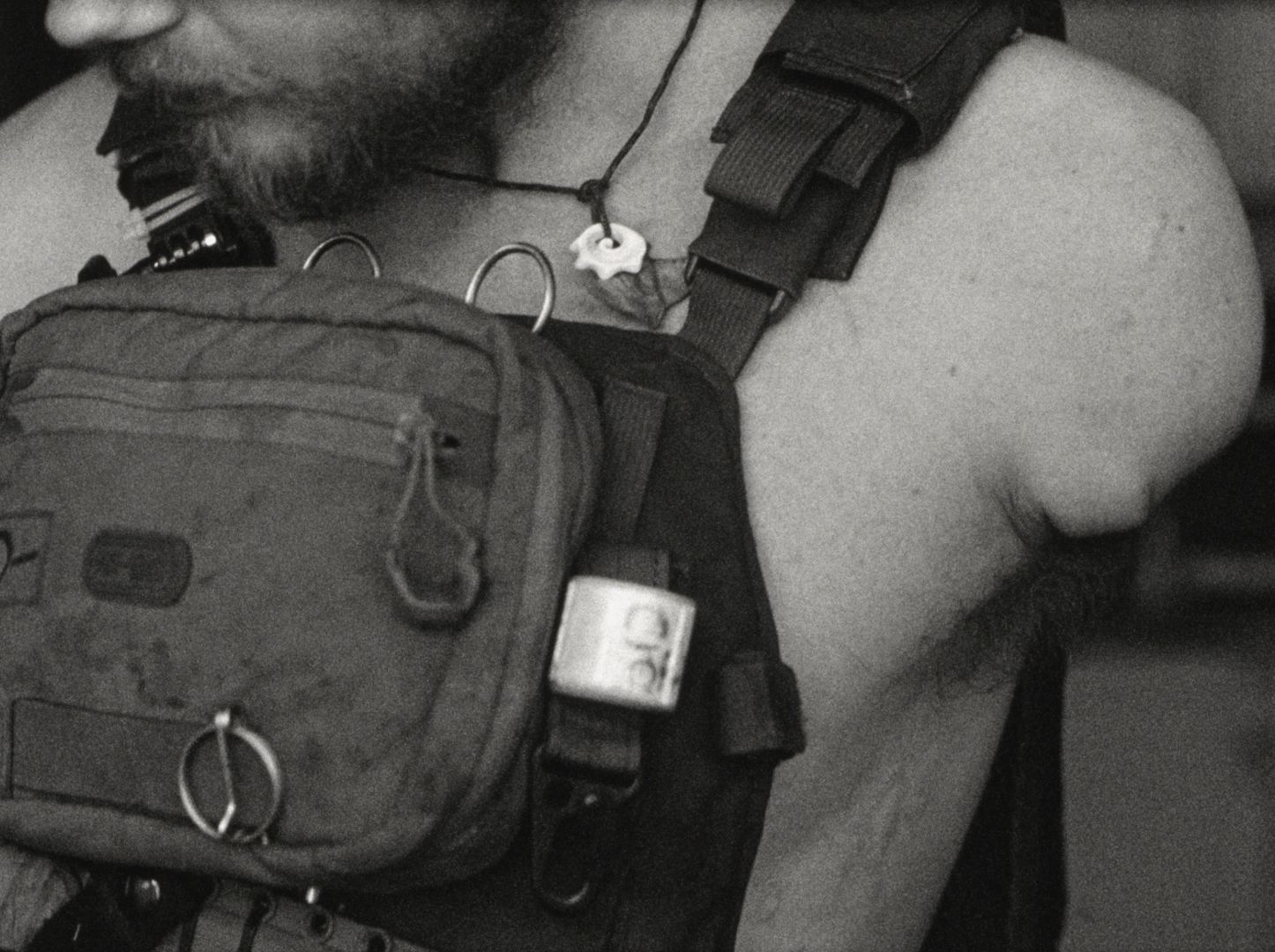
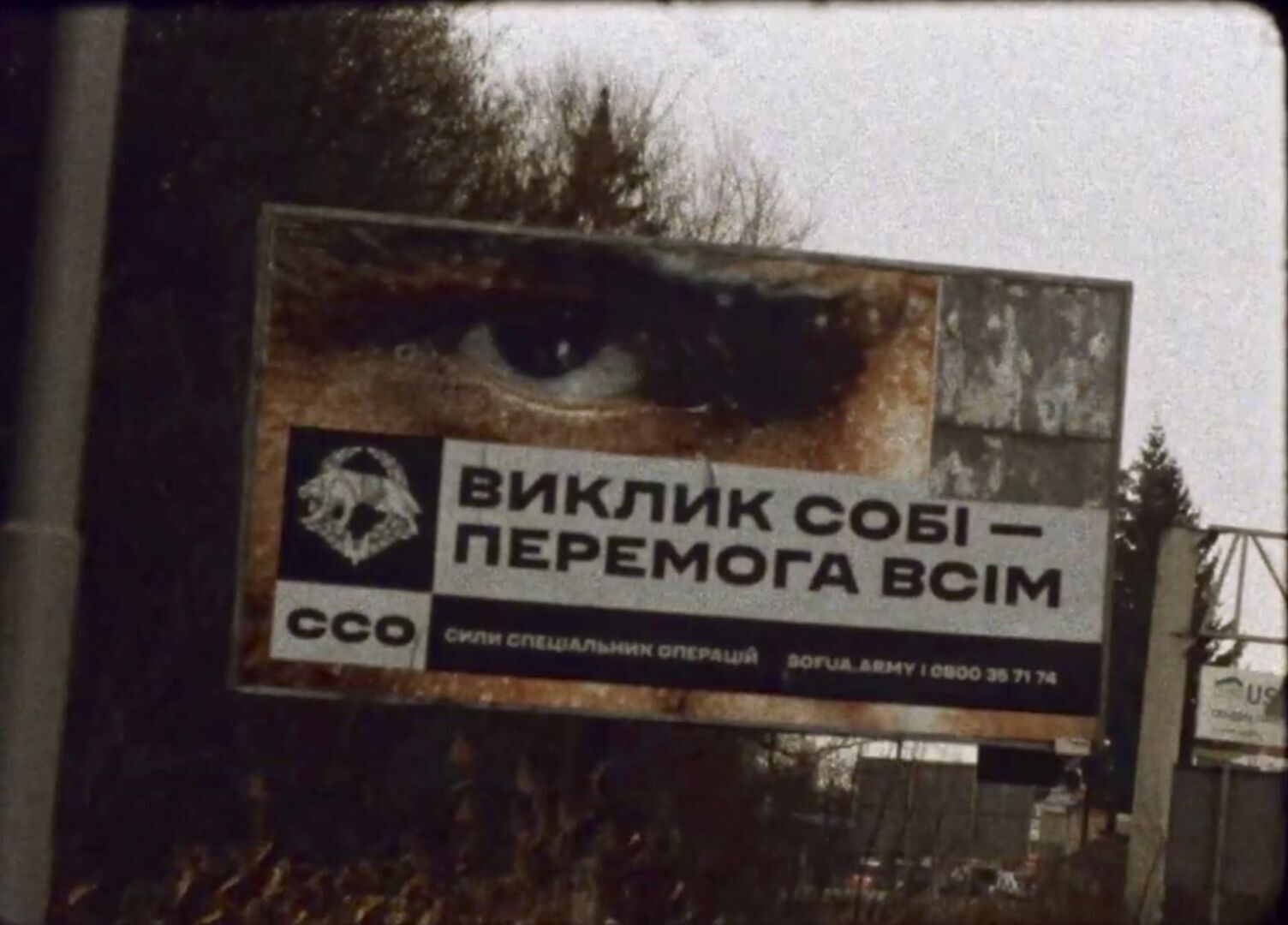
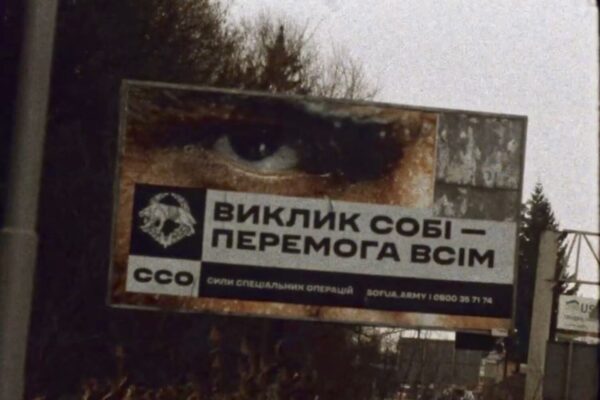
- LETTER FROM A COLOMBIAN SOLDIER
- EDDY
- Arnulf Rainer
- DOORWAY
Christian Flemm | 2025 | 16mm | 11 mins
Grace Baggott | 2023 | 16mm | 4 mins
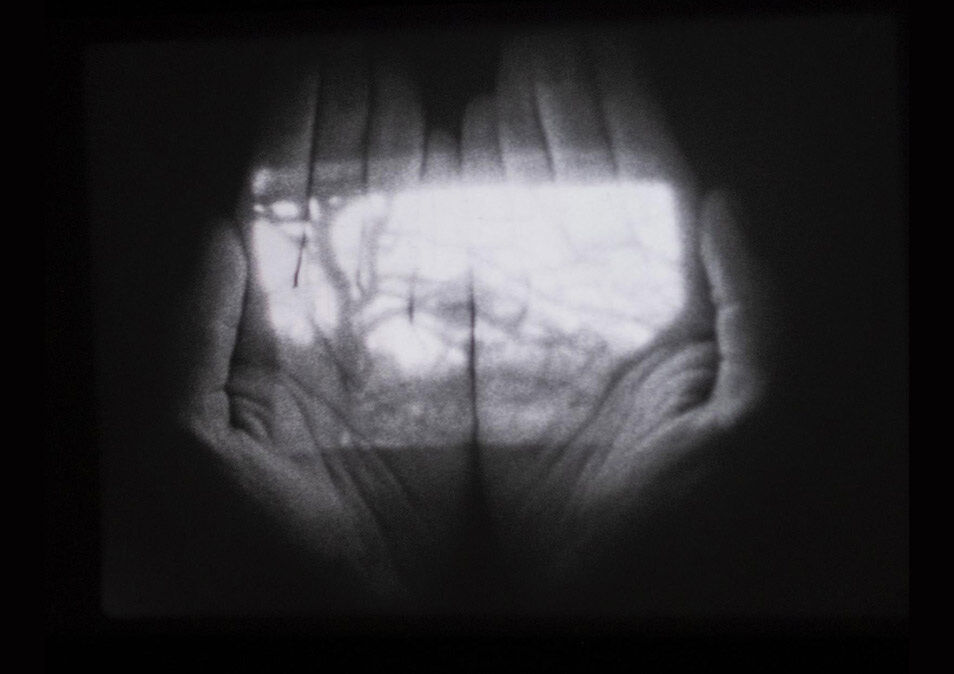
II (Above) explore les dimensions de l’espace-temps analogique ; le temps durant lequel le film a été tourné, projeté, re-tourné et re-projeté explore l’infini du paysage temporel cinématographique, passant d’une réalité observée à une autre.
II (Above) explores the dimensions of analogue time-space; The time in which the film was shot, projected, reshot and reprojected all explores the infinity of cinematic time-scape jumping from different spectated realities.
Daniel Romphf | 2025 | 16mm | 3 mins
Christian Flemm | 2024 | 16mm | 5 mins
Maya Deren | 1945 | 16mm | 3 mins
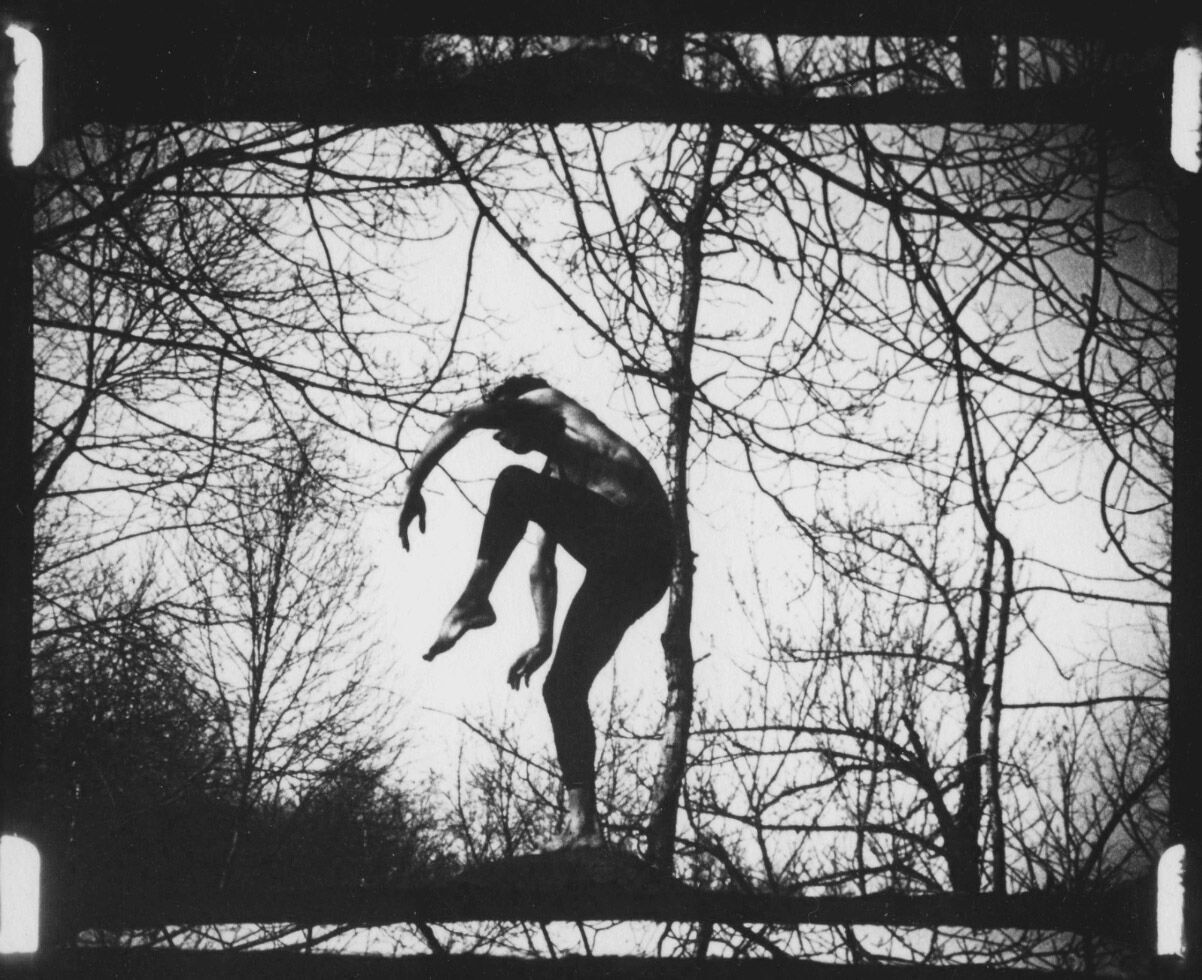
C’est dans son troisième projet, Study in Choreography for Camera, que Maya Deren a pleinement concrétisé sa vision consistant à libérer le corps humain des contraintes de l’espace théâtral – et réel. Dans *Study*, un danseur (Talley Beatty) évolue avec aisance au sein et entre différents environnements (forêt, salon, salle d’exposition, etc.), un résultat obtenu grâce à l’harmonisation minutieuse de ses mouvements, chorégraphiés avec précision, et du rythme du montage du film. Alors que Beatty passe d’un espace à l’autre au gré des raccords de Deren, une nouvelle réalité géographique se crée, où de grandes distances peuvent être parcourues en l’espace de quatre minutes seulement. La performance disciplinée de Beatty ne trahit jamais les difficultés que lui et sa réalisatrice ont dû surmonter pour parvenir à un résultat aussi fluide. La caméra de Deren devient, en effet, la partenaire de Beatty. (The Film-Makers’ Cooperative)
It was in Maya Deren’s third project, Study in Choreography for Camera, that Deren fully realized her vision of freeing the human body from the confines of theatrical—and actual—space. In Study, a dancer (Talley Beatty) moves effortlessly within and between different environments (forest, living room, museum gallery, etc.), an achievement arrived at through the careful matching of his precisely choreographed movements with the film’s editing pattern. As Beatty leaps from space to space across Deren’s film splices, a new geographical reality is created, one where great distances can be covered within the span of just four minutes. Beatty’s disciplined performance never betrays the difficulties that he and his director must have overcome to attain so fluid a result. Deren’s camera, in effect, becomes Beatty’s partner. (The Film-Makers’ Cooperative)
Christian Flemm & Max Parnell | 2026 | 16mm | 11 mins
Christian Flemm & Max Parnell | 2026 | 16mm | 11 mins
Peter Kubelka | 1960 | 16mm | 7 mins
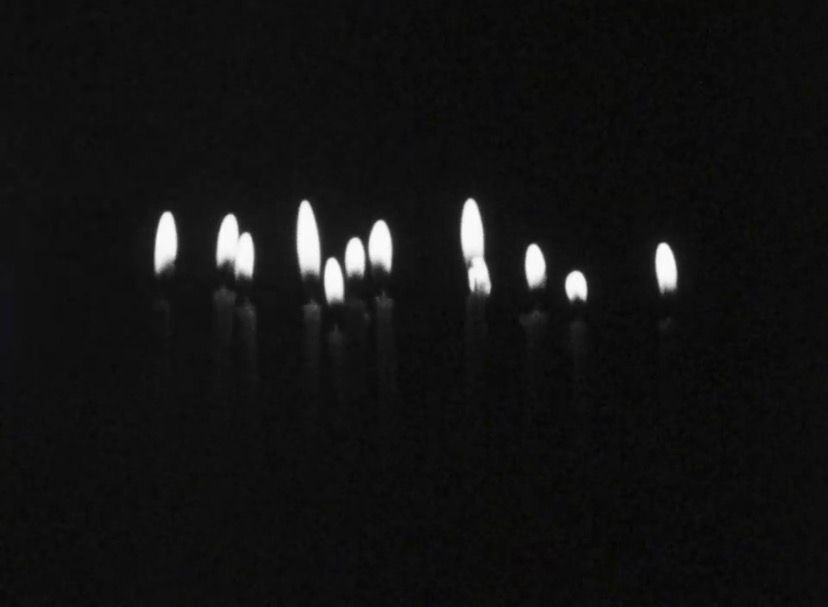
« Je pense qu’Arnulf Rainer est le film le plus proche de l’essence du cinéma qui existe parce qu’il emploie les éléments qui constituent le cinéma dans leur forme la plus radicale et la plus pure. C’est la lumière et l’absence de lumière, c’est le son et l’absence de son et leur événement dans le temps.
Ainsi avec Arnulf Rainer: voulant rendre hommage à l’oeuvre de son ami Rainer, après l’avoir filmé dans son atelier et tenté toutes sortes d’expériences, Kubelka finit par faire un film sans image du tout (ou plutôt avec seulement l’horizon, le fondement de toute image), soit une succession soigneusement structurée de photogrammes blancs ou noirs, accompagnés ou non de son – utilisant ainsi les quatre figures audiovisuelles les plus simples de l’histoire du cinéma. » Dominique Noguez. (Light Cone)
ARNULF REINER is one of the earliest flicker films. The film alternates between light or the absence of light and sound or the absence of sound. Since its May 1960 premiere in Vienna, Arnulf Rainer has become known as a fundamental work for structural film. Kubelka released a “negative” version, titled Antiphon, in 2012. (Light Cone)
Larry Gottheim | 1971 | 16mm | 8 mins
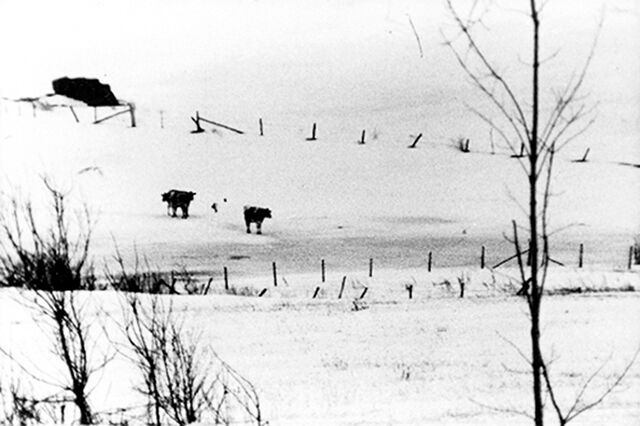
« Les œuvres parfaites ont cette particularité de paraître discrètes ou simples ; leurs complexités semblent si bien maîtrisées qu’elles s’enchaînent avec fluidité – elles fascinent par leur forme –, une forme qui témoigne de l’harmonie entre de multiples préoccupations esthétiques. … DOORWAY, de Larry Gottheim, est un film de cette trempe. Son souci de travailler les contours, d’isoler les détails, la place prépondérante du cadre en tant que forme et révélateur de contours, son amour de la texture photographique, tout cela est traité avec lucidité dans ce film. … On est happé par ces magnifiques images grâce au sens poétique que Gottheim a des qualités photographiques – à savoir la lumière, le mouvement, la texture –, ainsi qu’à sa capacité à transformer un paysage par une utilisation rigoureuse du cadre, qu’il utilise pour isoler et ainsi attirer l’attention sur une beauté jusque-là cachée, révélée par un regard extrêmement sélectif. » – Barry Gerson, Film Culture
“Perfect works have a way of appearing unobtrusive or simple, the complexities seeming to be so correct that they flow – mesmerize one through their form – a form that bespeaks of harmony between many aesthetic concerns. … Larry Gottheim’s DOORWAY is such a film. His concern for working with edges, isolating details, the prominence of the frame as a shape and revealer of edges, love of photographic texture, are all dealt with lucidly in this film. … One is drawn into these beautiful images through Gottheim’s poetic feel for photographic qualities – i. e., light, movement, texture – his ability to transform a landscape through his rigorous use of the frame to isolate in order to call attention to a heretofore hidden beauty revealed through a highly selective eye.” – Barry Gerson, Film Culture